Three Goddesses & Virtues

DIN
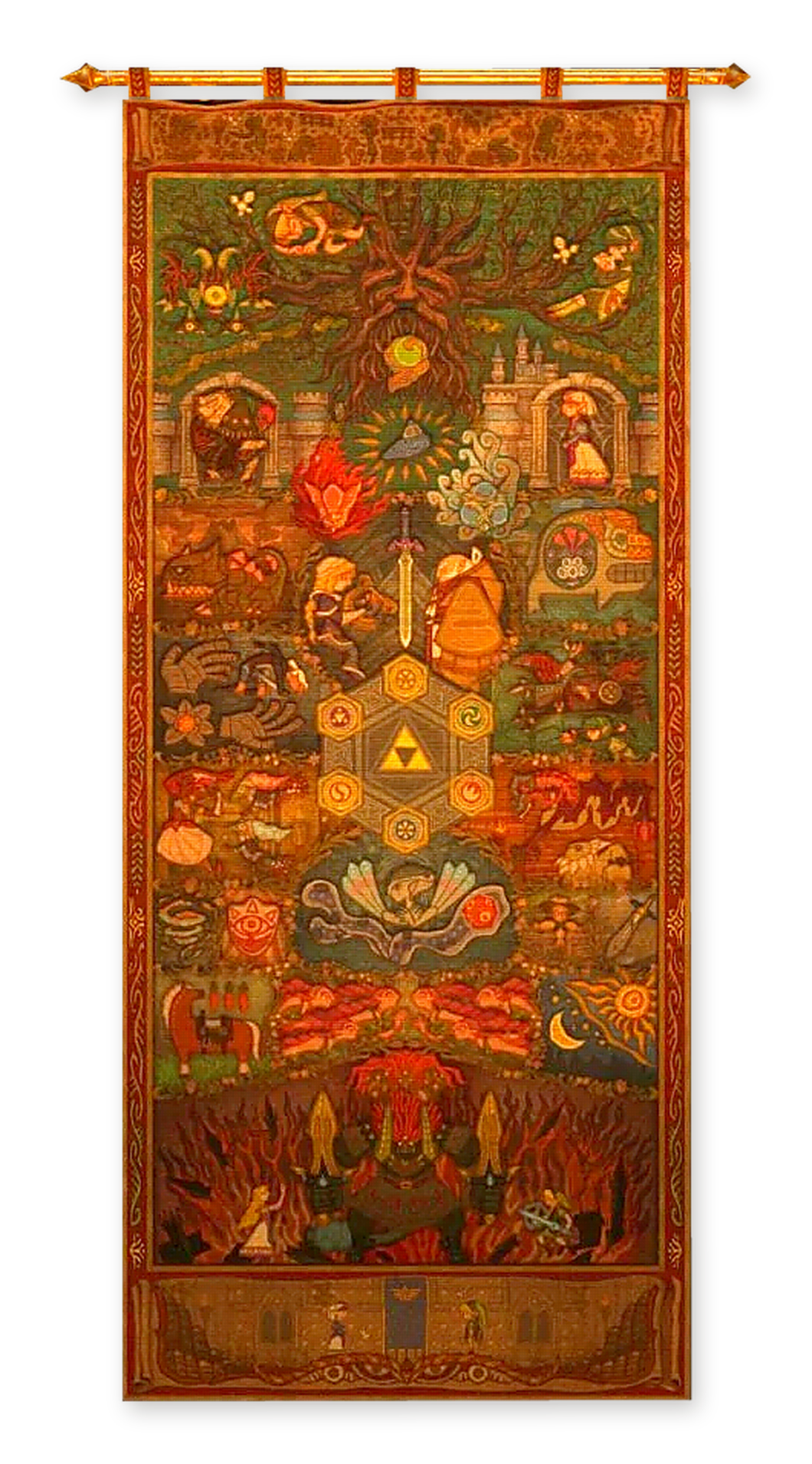
The Goddess of Power
The goddess of power created the land.
According to the Great Deku Tree, Din, "with her strong flaming arms, cultivated the land and created the red earth." Din, the Goddess of Power, formed the terrain of Hyrule. She is closely associated with the Triforce of Power.

NAYRU
The Goddess of Wisdom
The goddess of wisdom created order.
Nayru is the goddess who "poured her wisdom onto the earth and gave the spirit of law to the world." She is revered for creating the laws and physics of the universe that keep it in order. As the goddess of wisdom, she is associated with the Triforce of Wisdom.

FARORE
The Goddess of Courage
The goddess of courage created life.
Farore, "with her rich soul, created all the living inhabitants in the world to uphold the law." She is the goddess of all life. Farore is associated with the Triforce of Courage.
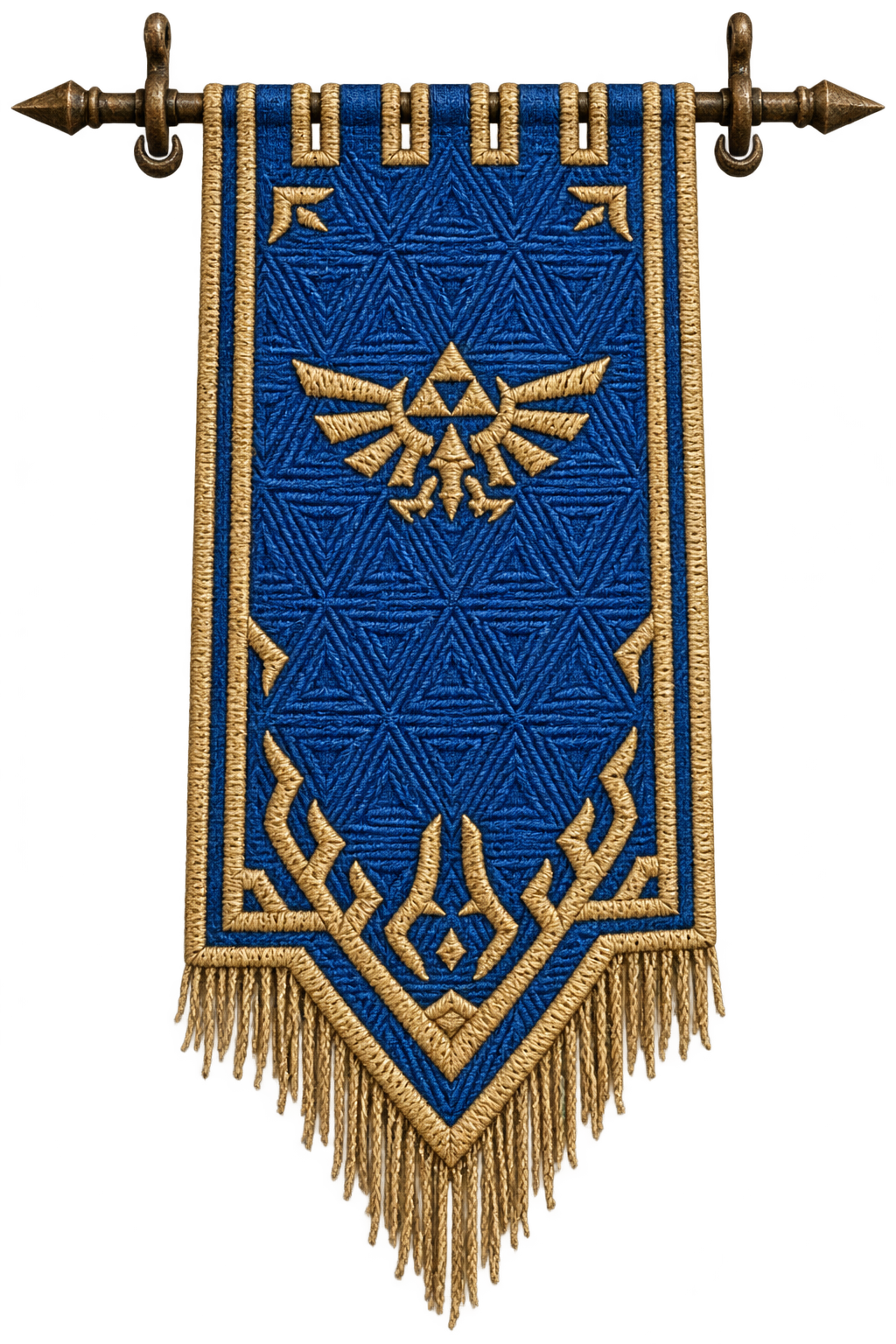
The Triforce
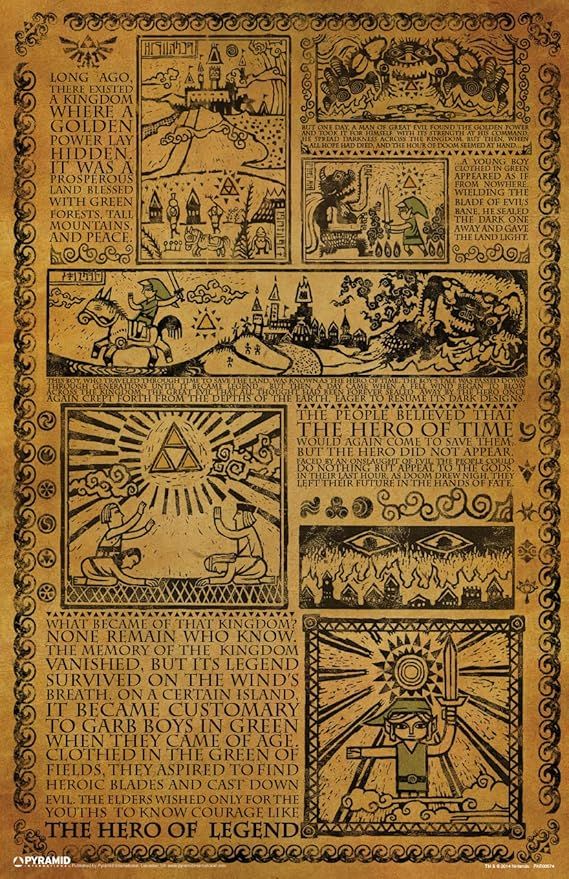
Power, Wisdom and Courage unite in the golden Triforce. Din shaped the land, Nayru established order, and Farore brought life to the world: three divine gifts reflected in its three sacred pieces.
For Hylian Legends, these virtues inspire a shared purpose: train with resolve, share knowledge freely and stand beside your companions. Each member brings a different strength; together, we carry the light forward.
Origins of the Triforce
The Three Goddesses belong to Zelda's fictional mythology. The history below explores a real-world visual parallel and the Triforce's development as a game concept; these are distinct from the legend told within Hyrule.
Before Hyrule: The Three Scales
Long before the Triforce appeared in The Legend of Zelda, the same three-triangle arrangement existed in Japan as the Mitsuuroko (三つ鱗), or "three scales," crest associated with the Hōjō clan. The emblem remains visible in Japanese temples, memorials, family graves and business logos. Luke Plunkett discusses this historical precedent in The Real History of the Triforce (Kotaku, July 21, 2011).
The visual resemblance is clear, but resemblance is not the same as documented inspiration. Wikipedia describes the design as derived from the Hōjō crest; the sources reviewed for this section do not establish a direct statement from Nintendo confirming that specific influence.
The Legend of Tokimasa and Benzaiten
A traditional literary account, not a contemporary record of a supernatural event. Rekishinowa attributes this legend to Taiheiki, Book 5.
According to the legend, Hōjō Tokimasa withdrew to Enoshima to pray for his descendants' prosperity. Guidoor's local tourism retelling dates the retreat to 1190 and says his prayers lasted 37 days. These details belong to the traditional account, rather than independently verified events.
On the final night, Benzaiten appeared as a beautiful woman. She told Tokimasa that, in a former life, he had been a Hakone priest who dedicated 66 copies of the Lotus Sutra to sacred places across Japan's 66 provinces. His descendants would prosper, she promised, but their rule would end within seven generations if they departed from proper government. This blessing and warning are recounted in the Enoshima legend.
The goddess then transformed into a great serpent or dragon and disappeared into the sea. Three large scales remained. Tokimasa accepted them as a sign that his prayers had been answered and adopted the "three scales" emblem for his family's banner, as described in The Legend of the Three Scales.
For a Zelda reader, these motifs invite comparison: a divine blessing, a condition attached to prosperity, and a three-part emblem. This is a thematic parallel, not confirmed evidence of Nintendo's inspiration. The story leaves behind three scales, not three triangles; the triangles are their heraldic representation.
From Electronic Chips to Sacred Relic
In a November 2012 Gamekult interview, Shigeru Miyamoto explained that the Triforce fragments were originally conceived as electronic chips for an adventure spanning the past and future. Link would connect those eras. The futuristic premise was ultimately dropped in favor of heroic fantasy.
This interview documents an early game-design concept, not the origin of the three-triangle shape. English accounts of the interview are available from Zelda Dungeon and Zelda Universe.
When Courage Joined the Legend
The familiar trio developed over time. The original The Legend of Zelda (1986) featured the Triforces of Power and Wisdom. Zelda II: The Adventure of Link (1987) introduced the Triforce of Courage, completing the three virtues celebrated in the series and on this page. See the Triforce overview for the artifact's appearances and development.
The Hylian Legends Oath
For Hylian Legends, protecting the Triforce means honoring the ideals it inspires: train with purpose, share what you know and stand beside your companions when the road grows dark.
“We draw the blade together, or not at all.”
This is our guild's interpretation of the legend: a light carried forward through fellowship, one adventure at a time.